Training & Documentation Recordkeeping
A safety program that exists only as informal knowledge in an experienced crew lead's head isn't a program OSHA recognizes, and it isn't one that protects the business if something goes wrong. Several individual OSHA standards that apply to SPF work each carry their own specific documentation requirement — this page pulls them together into one place.
Good recordkeeping isn't paperwork for its own sake. It's the evidence that training actually happened, that it covered the right material, and that it's current — which matters both for protecting workers and for how an OSHA inspection or a citation dispute plays out.
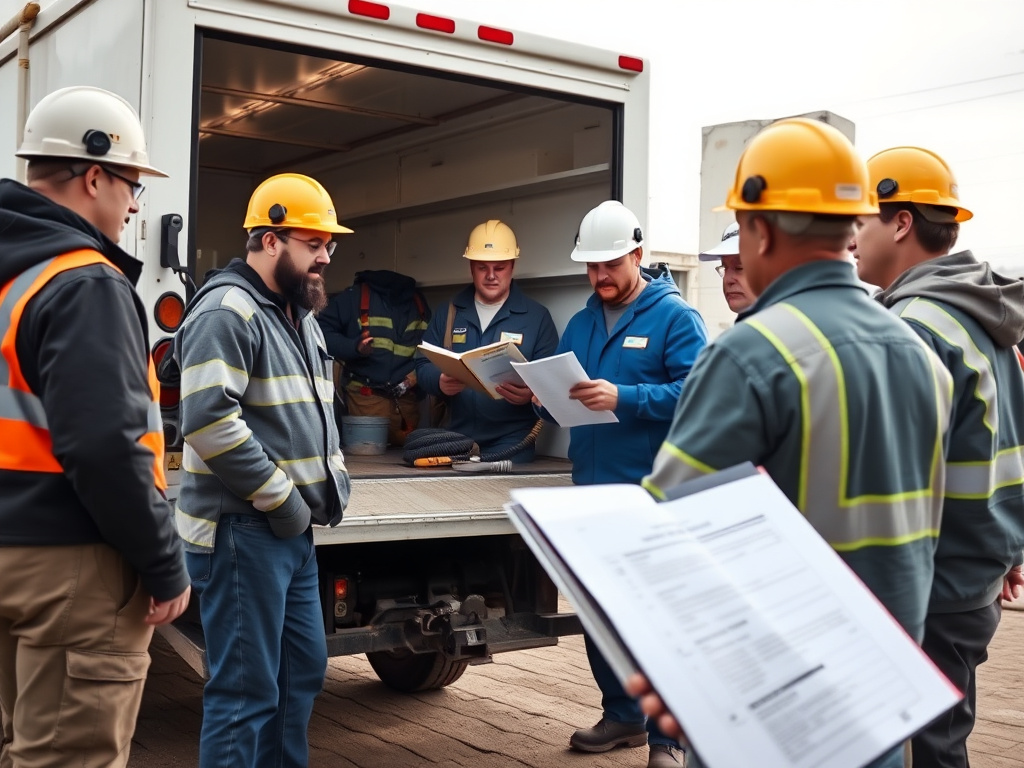
Requires records of respirator fit testing, retained until the next fit test.
Requires a written certification of the PPE hazard assessment and documented PPE training.
Requires documented hazard communication training for employees working with hazardous chemicals.
What this program element needs to cover
What actually needs to be on file
Pulling together the individual standards that apply to SPF work, a defensible training file for each employee typically includes: hazard communication training (what chemicals they work with and why they're hazardous), PPE training and the underlying hazard assessment certification, and — for anyone required to wear a respirator — a medical evaluation clearance, an initial and annual fit test record, and respirator use/care training.
None of these are optional 'nice to have' documents. Each one traces back to a specific OSHA requirement that applies the moment a crew starts spraying SPF that requires PPE and respiratory protection — which, in practice, is nearly every job.
New-hire onboarding
The riskiest point in a lot of informal safety programs is a new hire's first week — when they haven't yet been through the full training sequence but are already on job sites. A documented onboarding checklist that has to be completed and signed off before someone sprays or works near active spraying closes this gap.
How long to keep records
Retention requirements vary by record type — for example, fit test records need to be kept until the next fit test, while other records (like exposure or medical records under separate OSHA recordkeeping rules) can have longer retention periods. Build a simple retention rule into your system for each record type rather than guessing case by case, and when in doubt, keep records longer rather than risk gaps.
What an OSHA inspection typically asks for
If OSHA conducts an inspection — whether prompted by a complaint, a referral, or as part of a targeted program — documentation is usually one of the first things requested: the written respiratory protection program, PPE hazard assessment certification, fit test records, and hazard communication training records for the employees on site. Contractors who can produce these quickly and completely are in a fundamentally different position than those who can't.
Training & Recordkeeping — what should be on file
- 1Individual training file for every employee, updated as training happens
- 2Fit test records current and retained per 1910.134
- 3PPE hazard assessment certification on file and signed
- 4Hazard communication training logged for every chemical system in current use
- 5New-hire onboarding checklist with sign-off before independent job-site work
- 6A simple, known-location system so records are accessible quickly if requested
See our templates & checklists page for what a downloadable-style version of this checklist should include.
Training & Recordkeeping FAQs
Missing documentation doesn't necessarily mean the training never happened, but from an inspection standpoint, undocumented training is very difficult to establish as compliant. Gaps in required records are a common basis for citations even when the underlying safety practice was reasonably sound — which is exactly why documentation matters as much as the training itself.
OSHA's Hazard Communication standard requires training when a new hazard is introduced (a new chemical or product) or when job duties change in a way that introduces a new hazard — it isn't necessarily an annual requirement by default, but many contractors build in an annual refresher as good practice, especially given crew turnover in this trade.
Yes — the individual OSHA standards that apply to SPF work (respiratory protection, PPE, hazard communication) don't have a small-business or small-crew exemption from their documentation requirements. A simple, consistently used system is far more valuable than an elaborate one that gets abandoned after a few weeks.
Other core program elements
Respiratory Protection
A written program covering respirator selection, fit testing, medical evaluations, and use — built around OSHA's respiratory protection standard.
Read morePPE Requirements
Full-body coverage requirements — coveralls, gloves, eye and face protection — for anyone in the spray zone.
Read moreChemical Handling & Isocyanate Safety
Exposure limits, safety data sheets, and safe storage/handling for the two-component chemistry behind SPF.
Read moreGet your crew's safety program moving
Tell us where your crew stands today and what you need — checklists, a training log, or help getting a program started from zero.