Isocyanate Exposure: What Every SPF Crew Needs to Know
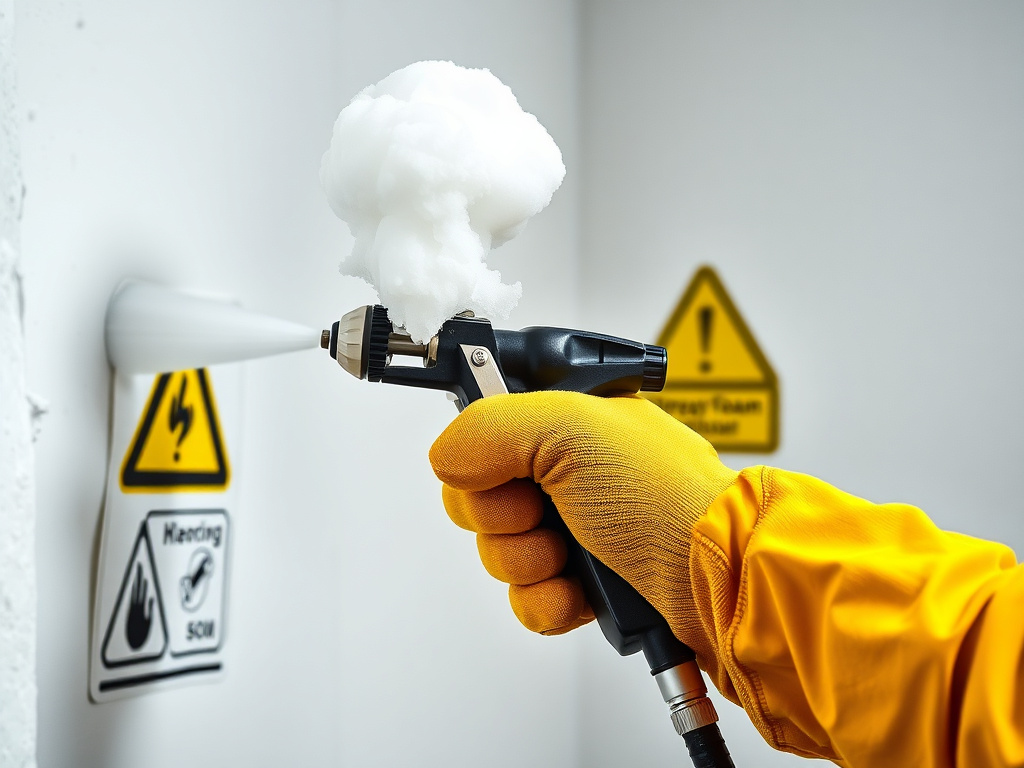
If you spray SPF, you work with isocyanates every day — but that doesn't mean every crew member actually understands what they are, why they matter, or what specifically controls the risk. This is the chemistry that drives nearly every other part of a real SPF safety program.
What is MDI?
Most modern spray polyurethane foam systems use methylene diphenyl diisocyanate (MDI) as the isocyanate component of the two-part chemistry. When the isocyanate side reacts with the resin/polyol side, it expands and cures into foam — but during that reaction, and while mixing and spraying, MDI is released as an aerosol and vapor that can be inhaled or contact skin and eyes.
Why exposure matters more than it might seem
Isocyanates are respiratory and skin sensitizers. That means repeated exposure can cause a worker's immune system to become sensitized — and once that happens, even very low future exposure levels can trigger a reaction, including occupational asthma. This is different from a lot of workplace chemical hazards, where the dose mostly determines the effect. With sensitization, the exposure history matters as much as any single day's exposure.
What actually controls exposure
A real SPF safety program layers several controls together, because no single one is sufficient on its own:
- Ventilation — mechanical airflow in the space being sprayed, reducing airborne concentration at the source
- Respiratory protection — a properly selected, fit-tested respirator matched to the specific hazard level
- Skin protection — full-coverage chemical-resistant coveralls and isocyanate-rated gloves, since skin contact is also an exposure route
- Work practices — isolating the work area, controlling re-entry timing, and keeping non-essential personnel out during and shortly after application
It doesn't end when the spraying stops
Off-gassing continues for a period after visible curing — how long depends on the specific product's chemistry, which is why the manufacturer's safety data sheet (SDS) re-entry guidance for that exact SPF system matters more than a generalized rule of thumb. Treating the moment the gun goes quiet as the moment exposure risk ends is a common and avoidable mistake.
Building this into your program
See our chemical handling and isocyanate safety page for the full breakdown of SDS management, storage, and handling practices, and our respiratory protection program page for how to build the program-level requirements around this hazard.
Related FAQs
This is a medical question best answered by a qualified occupational health provider, not something we're positioned to advise on here — but the practical safety takeaway is the same regardless: prevention through consistent exposure control is far more reliable than managing a reaction after sensitization has occurred.
Both use isocyanate-based chemistry and both require the same category of exposure controls during spraying — the specific formulation and manufacturer's SDS for the exact product in use is the right reference for any differences in handling guidance, rather than assuming one foam type is inherently safer to spray than the other.
OSHA's permissible exposure limit (PEL) is the legally enforceable limit — 200 µg/m³ as a 15-minute ceiling for MDI. NIOSH, a research agency, has published separate recommended exposure limit (REL) guidance that is generally more conservative than OSHA's PEL; RELs aren't independently enforceable but reflect updated science and are worth understanding as a more protective benchmark.
More from the blog
OSHA Citations Spray Foam Contractors Actually Get
OSHA publishes its most frequently cited standards every year. Several of the standards near the top of that list map directly onto everyday spray foam work — here's which ones and why.
Read article Getting StartedBuilding a Safety Program From Scratch: A Spray Foam Contractor's Checklist
Starting from nothing is less overwhelming than it looks. Here's a practical order of operations for building a real, documented SPF safety program.
Read articleGet your crew's safety program moving
Tell us where your crew stands today and what you need — checklists, a training log, or help getting a program started from zero.